
The RH2INE news story: RH2INE steerco visits the Port of Basel and Hydrospider
The RH2INE Steering Committee met in Basel for two days of discussions and site visits, highlighting the progress being made towards establishing a hydrogen ecosystem for inland shipping and industry along the Rhine corridor.
The first day brought together RH2INE partners at the Port of Basel to discuss the programme's ongoing activities and future priorities. The Steering Committee reviewed progress across the initiative and exchanged views on the next steps needed to accelerate the deployment of hydrogen infrastructure, strengthen cross-border cooperation and support the transition to zero-emission inland waterway transport.
Switzerland's gateway to the Rhine
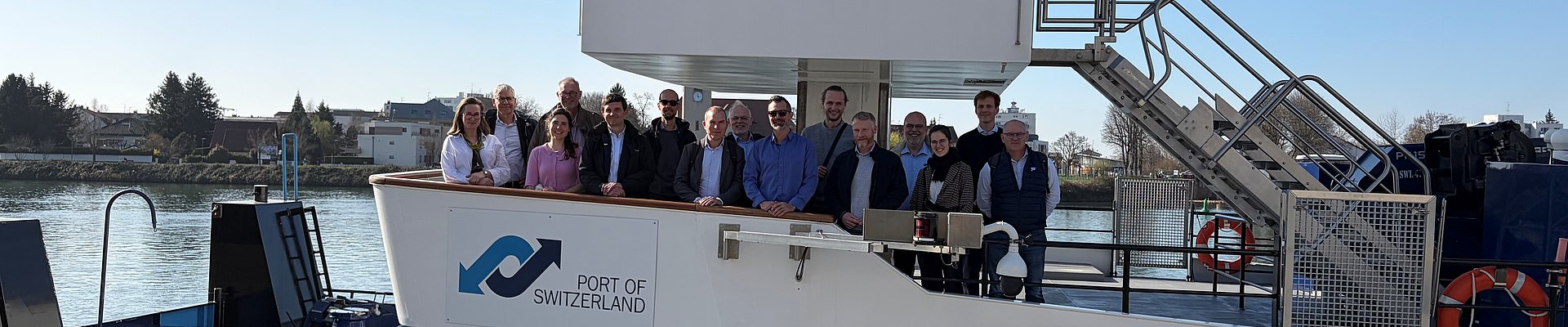
The discussions were complemented by a boat tour through the Port of Basel, offering a unique perspective on one of Europe's most strategically located inland ports. Situated on Europe's central freight corridor, the port is positioning itself as a key hub for the hydrogen economy. One of the initiatives driving this ambition is H2 Hub Switzerland, an association that brings together the port, the energy sector and local industry to accelerate the development and use of green hydrogen. By connecting producers, users and logistics partners, the initiative is creating the conditions for a thriving regional hydrogen ecosystem. The visit demonstrated how ports can play a central role in the emerging hydrogen economy by connecting energy production, industry and transport.
A major project for the port is the planned development of a 15 MW electrolyser in Birsfelden, one of the Port of Basel's three port locations. The electrolyser will produce renewable hydrogen to help decarbonise the region's energy-intensive industries. At the same time, locating hydrogen production within the port creates opportunities to supply hydrogen to inland vessels using tanktainers. Such developments closely align with the ambitions of RH2INE, which seeks to establish a reliable hydrogen supply chain along the Rhine corridor.
Hydrospider
On the second day, the Steering Committee visited Hydrospider, one of Switzerland's leading producers of green hydrogen. The production facility is located at the Alpiq hydropower plant in Gösgen, where renewable electricity generated by hydropower is directly converted into hydrogen through electrolysis. This integrated approach ensures that the hydrogen produced has a very low carbon footprint while demonstrating the value of coupling renewable electricity generation with hydrogen production.
Hydrospider has become a cornerstone of Switzerland's hydrogen ecosystem, supplying green hydrogen for a growing fleet of hydrogen-powered heavy-duty vehicles. The project illustrates how cooperation between renewable energy producers, industrial partners and mobility providers can successfully create an operational hydrogen value chain, from production to end use.
The visits to the Port of Basel and Hydrospider clearly demonstrated that the hydrogen transition is moving beyond ambition towards implementation. Investments in production facilities, logistics infrastructure and regional cooperation are laying the foundations for the wider deployment of hydrogen in industry and inland shipping.
For RH2INE, these developments underline the importance of international collaboration. By connecting regional initiatives across the Rhine corridor, the programme supports the creation of an integrated hydrogen network that will contribute to the decarbonisation of European freight transport and strengthen the role of inland waterways in a sustainable transport system.


