
Your working groups quarterly update (summer '26)
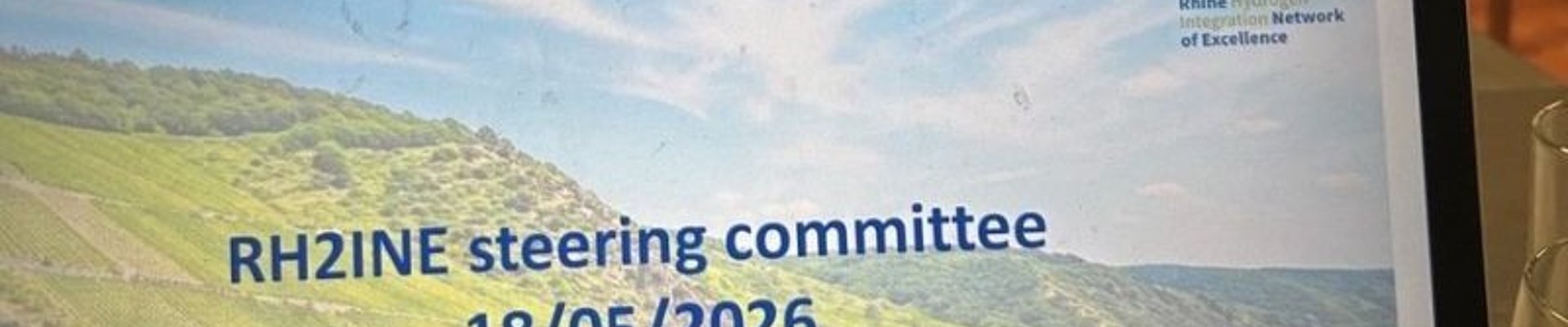
The RH2INE Working Groups met in Rotterdam this May to review progress across the programme's key work streams. A major highlight of the meeting was the significant progress made by the Standardisation Working Group, which is finalising the technical framework that will enable interchangeable hydrogen tanktainers across the Rhine corridor. At the same time, updates were shared on the tanktainer pool company, policy developments, Living Lab activities and the launch of the roadbook for inland terminals.
Standardization
The Standardization Working Group presented the near-final open design standard for swappable gaseous hydrogen (GH₂) tanktainers. The standard establishes harmonised interfaces between tanktainers, vessels and filling infrastructure while allowing manufacturers the flexibility to optimise their own designs. The framework is built around interoperability, ensuring that certified tanktainers can be safely exchanged between different ships equipped with standardized energy compartments. Extensive work has also been carried out on the safety philosophy, covering structural integrity, emergency shutdown systems, thermal pressure relief devices, monitoring systems and multimodal compliance with ADR, RID, ADN and the future ES-TRIN 2027 framework (while ensuring compatibility with the CONDOR reference design). With the reference design expected to be completed by the end of June, the standard will provide a common technical basis for certification, procurement and large-scale market deployment.
Tanktainer Pool Company
The ‘Rh2inetainer Company’ (RTC), the future tanktainer pool company, also continued to make progress. Four potential investors are currently involved, while discussions remain open for additional partners. During the coming months, investors will finalise the business case, governance structure and shareholder agreements before the legal formation process begins in September. These preparations will position RTC to apply for upcoming subsidy programmes and launch pooled hydrogen tanktainer operations in 2027.
Policy
The Policy Working Group reviewed important legislative developments affecting hydrogen inland shipping. Updates covered the implementation of RED III across the Netherlands, Belgium and Germany, developments around ETS2, and the European consultation on the post-2030 renewable energy framework (RED IV). These discussions remain essential for creating a harmonised regulatory environment and strengthening the business case for renewable hydrogen in inland navigation.
Living Lab
Within the Living Lab, partners continue to support the first hydrogen-powered inland vessels through technical assistance and European funding opportunities. Particular attention is being given to the practical implementation of RED III and the potential to reduce hydrogen costs by leveraging renewable fuel obligations together with hydrogen suppliers, brokers and shipping companies.
Port Infrastructure
Finally, Port Infrastructure Working Group presented its roadmap for developing harmonised guidance on hydrogen storage and handling at inland ports. Bringing together ports from across the Rhine region, the initiative will produce practical recommendations covering permitting, safety requirements and infrastructure.
